
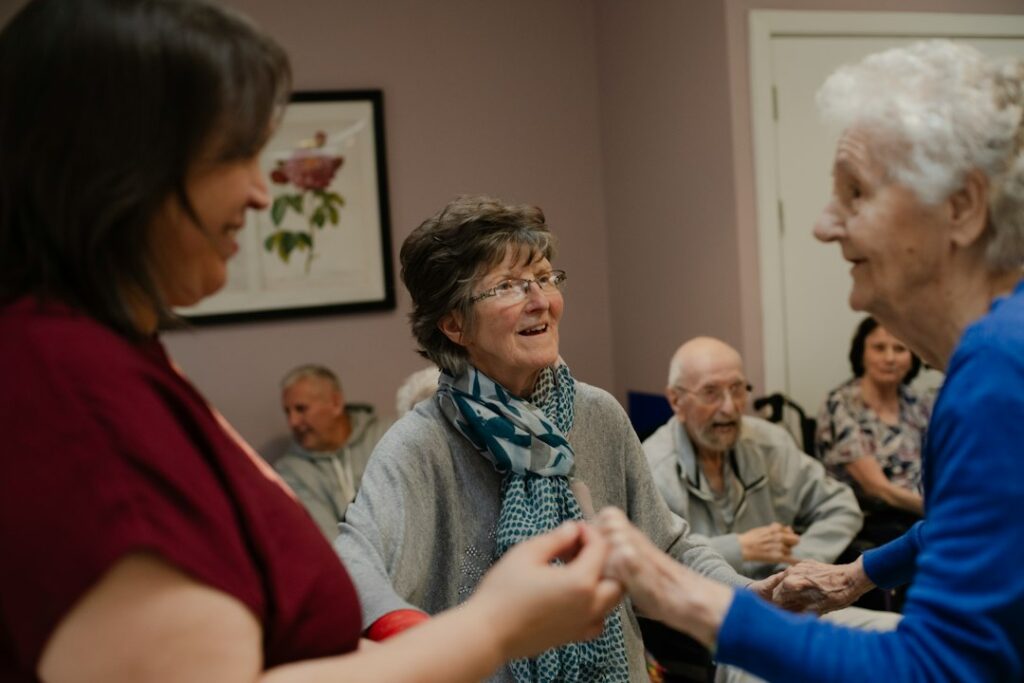
Why family participation matters
Family members can make assisted living events more meaningful by joining activities, learning the community’s routines, and paying attention to what helps a loved one feel comfortable. Participation does not need to be frequent, lengthy, or highly structured. A short visit, shared conversation, or willingness to attend an event can provide companionship and useful insight.
Assisted living events may include:
- Holiday gatherings and seasonal celebrations
- Music, art, exercise, or educational programs
- Group meals, birthday recognitions, and social hours
- Resident meetings or family information sessions
- Outdoor walks, gardening, games, or community outings
- Remembrance activities and other gatherings connected to residents’ traditions
The purpose of these events is not only entertainment. They can support social connection, encourage familiar routines, and help residents maintain interests that may have been part of their lives for many years.
How can a family member prepare before attending?
A little preparation can make the experience easier for everyone. Check the event’s time, location, expected length, and whether family participation is informal or requires advance planning. Some programs are designed primarily for residents, while others welcome relatives as active participants.
It can also help to ask about practical details such as:
- Whether the event will be indoors or outdoors
- If seating is available for residents who tire easily
- Whether food will be served and if dietary restrictions should be considered
- If photographs or recordings are permitted
- Whether the activity may be noisy, crowded, or unfamiliar
- How transportation, parking, or weather could affect arrival
In Sewickley, seasonal conditions may influence outdoor events. Heat, humidity, rain, snow, and icy walkways can affect mobility and comfort, particularly for residents who use walkers or wheelchairs. A flexible plan may be more useful than assuming an outdoor activity will proceed exactly as scheduled.
What should a family member do during the event?
The most helpful role is usually to participate without taking over. Sit nearby, follow the activity’s pace, and include the resident in decisions whenever possible. A family member might help with materials, read instructions aloud, offer an arm for balance if permitted, or simply share reactions to the activity.
Conversation often works best when it connects the present event with familiar memories. For example, a music program may lead to stories about dancing, church services, school performances, or favorite entertainers. A gardening activity might bring up past household routines or seasonal traditions.
Try asking open but manageable questions:
- “Which part of this activity do you like?”
- “Does this remind you of anything?”
- “Would you rather sit here or move closer?”
- “Would you like to participate, watch, or leave early?”
Avoid correcting every detail of a story or pressing for conversation when the resident appears tired. Quiet companionship can be just as valuable as active discussion.
How can family members support residents who are hesitant?
A resident may decline an event for many reasons, including fatigue, pain, anxiety, hearing difficulty, confusion, or simple lack of interest. Declining once does not necessarily mean the activity is unsuitable or that the person no longer wants social contact.
A gentle approach is usually better than pressure. Explain what will happen, how long the event may last, and that leaving early is acceptable. Arriving before a crowded program begins may reduce stress. Sitting near an exit or in a quieter area can also give the resident a greater sense of control.
If a loved one repeatedly avoids activities, observe the pattern. Does the person withdraw mainly from noisy events, evening programs, unfamiliar groups, or activities requiring fine motor skills? The pattern may reveal an overlooked barrier. Hearing loss, poor vision, medication effects, or difficulty understanding instructions can make ordinary events feel uncomfortable.
Family observations should be shared respectfully with appropriate staff, especially if a change in participation is sudden or accompanied by confusion, falls, unusual sleepiness, pain, or a change in appetite.
How should family members interact with other residents?
Friendly conversation with other residents can enrich an event, but privacy and personal boundaries still matter. Introduce yourself briefly, listen, and allow others to decide whether they want to continue talking. Avoid asking intrusive questions about health, finances, family conflict, or why someone lives in assisted living.

It is also helpful to remember that residents have different abilities and communication styles. Some may speak slowly, repeat themselves, use hearing devices, or need extra time to respond. Facing the person, reducing background noise, and speaking clearly can make conversation more respectful and effective.
Family members should not assume they are responsible for supervising everyone at an event. Follow the guidance of the staff members leading the program. If a resident appears distressed, unsafe, or medically unwell, alert staff rather than attempting to manage the situation independently.
Can family members help plan or improve events?
Yes. Families can contribute useful ideas, particularly when they understand a resident’s interests, cultural traditions, work history, or preferred communication style. Suggestions are most helpful when they are specific and realistic.
Examples might include:
- A familiar type of music
- A discussion connected to local history or seasonal changes
- A simple craft with large, easy-to-handle materials
- A quieter version of a popular group activity
- A program that includes residents’ spouses, grandchildren, or close friends
- A reminiscence activity based on photographs, recipes, or household traditions
Feedback should focus on observations rather than criticism. For example, “Several residents seemed to have difficulty hearing the speaker” is more useful than “The program was poorly organized.” Families can also mention what worked well, such as clear instructions, comfortable seating, or a slower pace.
What if a family member cannot attend in person?
In-person attendance is meaningful, but it is not the only way to stay connected. A family member may ask whether a brief phone or video conversation can be arranged around an event, or may send a handwritten note connected to a seasonal program. Sharing a familiar photograph, recipe, story, or song may give the resident something personal to discuss during the activity.
If distance, work schedules, illness, or transportation limitations make attendance difficult, consistency matters more than frequency. A predictable call before or after a regular event may be easier for a resident to remember and anticipate than occasional, lengthy visits.
Families should also avoid promising attendance unless they are reasonably certain they can come. For some residents, a missed visit can be upsetting. Clear, simple explanations are preferable when plans change.
How can families balance involvement with resident choice?
Family participation should support autonomy, not replace it. Adults living in assisted living retain preferences about how they spend time, whom they talk with, what they eat, and which activities they attend, subject to their individual care needs and decision-making abilities.
A family member may believe a program would be beneficial, but the resident may have a different view. Respectful involvement means offering choices, noticing nonverbal signals, and accepting a decision to watch rather than participate. It also means recognizing that interests can change.
The most useful question is often not, “Did the resident attend?” but, “Did the experience fit the resident’s needs that day?” A successful event may involve active participation, quiet observation, a short visit, or leaving early after a positive interaction.
What should families notice after the event?
Afterward, look for signs of comfort, enjoyment, fatigue, or distress. A resident may not describe the experience directly, especially if memory or communication is affected. Changes in mood, energy, conversation, or willingness to attend future programs can provide useful clues.
Keep brief notes if patterns are difficult to remember. Record the type of event, time of day, level of noise, length of participation, and what appeared to help. This information can support more thoughtful conversations with the people involved in the resident’s daily care.
Family engagement works best as an ongoing partnership centered on the resident’s preferences. Attending events is only one part of that process. Listening carefully, adapting to changing abilities, and treating ordinary moments of connection as worthwhile can make assisted living activities more comfortable and personally meaningful.
