
Moving into assisted living can provide greater safety, routine, and support, but it does not automatically prevent loneliness. A person may be surrounded by other residents and still feel isolated, especially after a move, a health change, the loss of a spouse, or a reduction in familiar activities.
Loneliness is not a personal failure. It is a signal that meaningful connection, stimulation, or emotional support may be missing. In assisted living, the most helpful response is usually a combination of patient relationship-building, daily structure, family involvement, and attention to physical or emotional health.
Why can someone feel lonely in assisted living?
A resident may feel lonely because familiar surroundings, responsibilities, and relationships have changed. Even a move that was necessary or beneficial can bring grief, uncertainty, and a loss of independence.
Common causes include:
- Missing a spouse, pet, home, neighbors, or longtime routines
- Difficulty hearing or seeing conversations clearly
- Trouble walking to shared spaces or participating in activities
- Feeling uncomfortable joining established social groups
- Depression, anxiety, memory changes, or fatigue
- A mismatch between available activities and personal interests
- Family members living far away or visiting less often than expected
- Seasonal limits on outdoor time during cold, wet, or icy weather
Some residents are naturally private and may not want large group activities. Others may want companionship but feel unsure how to begin. Loneliness can therefore look like quietness, irritability, sleeping more, skipping meals, or repeatedly saying that no one visits.
How can a resident make social connections after moving?
The most effective approach is often to begin with one predictable interaction rather than trying to join every activity. Familiarity grows through repeated contact.
A resident might start by:
- Sitting in the same area during meals
- Attending a small activity connected to a personal interest
- Greeting one neighbor each day
- Asking another resident about a hobby, hometown, book, or favorite music
- Spending a few minutes in a common area instead of remaining alone in a room
- Joining an activity briefly, even if staying for the entire event feels difficult
- Asking staff about quieter groups or activities for people with similar interests
It may take several attempts before a relationship feels comfortable. Social groups in any residential setting can seem established from the outside, but many residents are also looking for companionship. Simple, repeated contact often works better than a single large event.
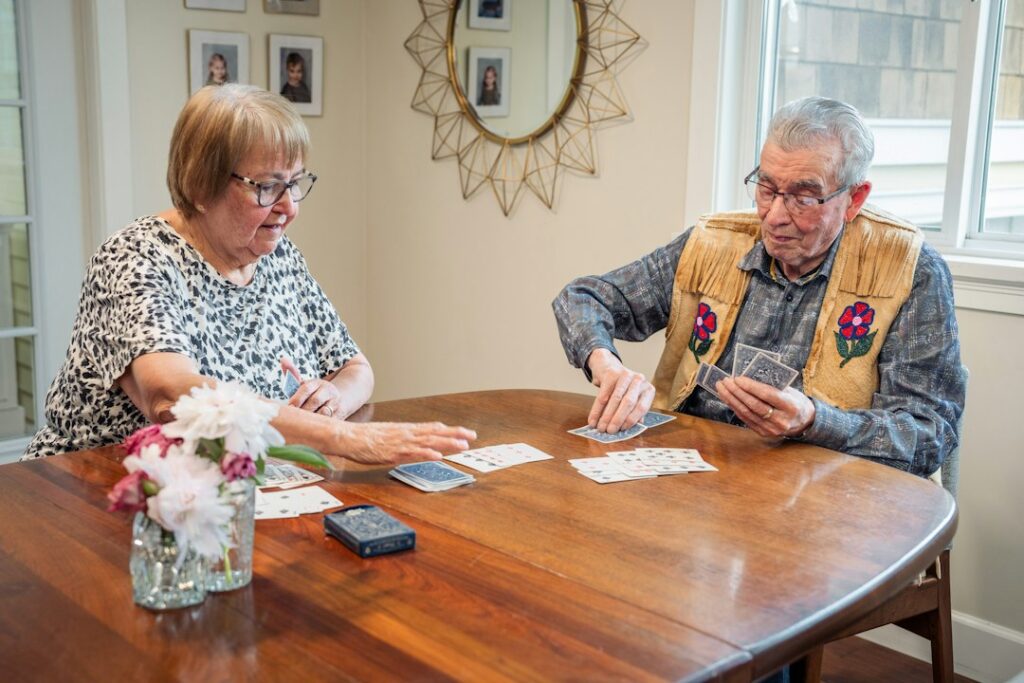
Residents who prefer one-to-one conversation may benefit from a regular coffee visit, shared television program, card game, walk through an indoor hallway, or scheduled phone call. Connection does not have to involve a crowded gathering.
Which activities are most helpful for reducing loneliness?
Activities are more likely to reduce loneliness when they provide both enjoyment and a reason to interact. Passive entertainment can be pleasant, but activities involving conversation, shared tasks, or cooperation often create stronger connections.
Useful options may include:
- Arts, crafts, music, or singing
- Games that encourage conversation rather than competition alone
- Exercise groups suited to different mobility levels
- Gardening or indoor plant care
- Reading discussions or storytelling groups
- Cooking demonstrations and shared snacks
- Faith-based or reflective gatherings
- Pet visits when available and appropriate
- Intergenerational visits with children or students
- Reminiscence activities using photographs, music, or familiar objects
A person does not need to enjoy every scheduled event. It is reasonable to ask for activities that reflect individual preferences, cultural background, language, mobility, and comfort level.
In Sewickley, seasonal weather may affect how often residents can sit outdoors or take walks. During winter or periods of heavy rain, indoor routines become especially valuable. A plan for hallway walks, window-side visits, exercise sessions, or indoor social time can help prevent long stretches of isolation.
How can family members help without making a resident feel dependent?
Consistent, specific contact is often more helpful than occasional promises to visit. A short call at a predictable time may provide more comfort than an irregular conversation that is frequently postponed.
Family members can:
- Set a regular call or video-chat schedule
- Ask about one specific activity or person rather than asking only, “How was your day?”
- Share photographs, familiar music, recipes, or news from home
- Visit during an activity and participate instead of only sitting in a room
- Help identify interests that staff may not yet know about
- Encourage connection without pressuring the resident to be outgoing
- Notice changes in mood, appetite, sleep, or personal care

If distance, work, illness, or transportation makes visits difficult, family members can coordinate calls among relatives or friends. A resident may also appreciate receiving letters, children’s drawings, printed photographs, or short recorded messages.
Family involvement should support independence. The goal is not to fill every hour or speak for the resident, but to help create opportunities for meaningful choice and connection.
What should staff know about loneliness?
Residents should tell staff directly when they feel lonely, even if the feeling seems embarrassing or difficult to explain. Staff may be able to suggest smaller activities, introduce compatible residents, adjust seating during meals, or help address barriers such as hearing, transportation within the building, or mobility limitations.
A useful conversation may include:
- Which times of day feel most difficult
- Whether the resident prefers one person or a group
- Activities enjoyed in the past
- Physical limitations that make participation harder
- Whether hearing, vision, pain, fatigue, or memory problems interfere
- Whether the resident feels sad, worried, hopeless, or unsafe
Loneliness can sometimes be mistaken for a personality change or lack of cooperation. Clear information helps staff distinguish between a preference for quiet and a resident who wants connection but cannot find a comfortable way to participate.
When might loneliness signal depression or another health concern?
Loneliness deserves closer attention when it is persistent, worsening, or accompanied by major changes in behavior. Depression is not a normal or unavoidable part of aging.
Residents and families should pay attention to:
- Ongoing sadness, hopelessness, or unusual tearfulness
- Loss of interest in previously enjoyable activities
- Significant changes in sleep or appetite
- Increased confusion, agitation, or withdrawal
- Frequent physical complaints without a clear explanation
- Statements about being a burden or not wanting to live
- Refusal of nearly all social contact or daily activities
A healthcare professional should be involved when these signs appear, particularly if they interfere with eating, medication routines, personal care, or safety. Any statement about self-harm or not wanting to live requires immediate attention through emergency services or a crisis resource.
Hearing loss, vision changes, pain, medication effects, and memory disorders can also make social interaction exhausting. Addressing these issues may improve connection as much as adding more activities.
How can residents maintain connection beyond the building?
A resident’s social world does not need to end at the assisted living community. Phone calls, letters, video conversations, transportation-supported outings, and visits from familiar people can preserve important relationships.
Some residents may enjoy maintaining a small role in family life, such as helping choose photographs, telling stories for younger relatives, folding laundry during a visit, or participating in household decisions. These activities reinforce identity and purpose rather than treating the person only as someone receiving care.
The most sustainable plan is usually simple: one or two regular social contacts, a preferred activity, time outdoors or near a bright window when possible, and a dependable way to speak up when isolation increases. Connection tends to grow through consistency, patience, and activities that feel personally meaningful.
